Business Waste Removal in Islington
Business waste removal in Islington needs to be organised, practical and straightforward for busy premises that cannot afford cluttered storage, overflowing bins or delayed clearances. Our service covers the collection and removal of commercial waste streams for offices, shops, hospitality venues and other workplaces that need a reliable way to keep unwanted material moving out of the building. The work can include routine rubbish removal, one-off clearances and the handling of mixed non-hazardous waste that has built up over time.
We focus on a clear, workable service rather than unnecessary disruption. That means planning the removal around access, item type and volume so the job is handled efficiently and the remaining space can be used properly again. For businesses comparing options, our pricing and quotes page gives a useful place to start when you want to understand how the work is assessed before you request a quotation.
Whether you need a single load removed after an office clear-out or continuing help with business waste that is taking up valuable room, our approach is shaped by the material itself and the setting it is coming from. Clearance work is easiest when the scope is understood early, so a short description of the items, access and timing is usually enough to begin. If you are ready to move things forward, you can make an enquiry in plain language and ask for a quote.
Commercial waste collections for workplaces
Commercial waste collection is about more than simply taking bags away. Businesses often have a mixture of packaging, paperwork, broken fittings, small fixtures, archive material and general waste that need to be removed together without creating extra admin for staff. Our service is suited to premises that want a practical clearance rather than a complicated process, with collections arranged around the volume and nature of the waste. It is a sensible choice when you need space restored quickly and want the removal handled in a tidy, methodical way.
Different workplaces produce different waste patterns, so the service is built to deal with varied loads instead of forcing everything into one routine. An office may need old furniture and boxes cleared after a change in layout, while a retail unit might need stockroom rubbish and display items removed. Hospitality and shared premises can also build up mixed waste that is awkward to shift internally. If you are comparing service options, the business waste removal page is a useful place to read more about the main service.
Typical commercial waste work may include:
- Office rubbish and bagged waste removal
- Packaging, cardboard and mixed non-hazardous material
- Old fixtures, light fittings and small fittings
- Storage room, back-office and stockroom clearances
- Items gathered during refurbishment or workplace reorganisation
Office waste and cleared workspace support
Office waste removal is often needed when desks, storage, shelving and accumulated paperwork begin to reduce usable space. A well-planned clearance can help businesses remove redundant items without turning the workplace upside down. We handle office waste in a way that supports both one-off clearances and smaller removals that are easier to tackle in stages. The aim is to deal with the clutter that has become part of the background and leave a more workable environment behind.
For some premises, the issue is not just waste volume but awkward items that are difficult to move through normal internal routes. Filing cabinets, broken chairs, redundant screens and surplus furniture can all create bottlenecks in storage and circulation areas. Our service is set up to remove those items alongside other office waste so the job can be completed as a single organised task. If you need a broader workplace clearance, the office clearance page covers a closely related service.
Before requesting a quotation, it helps to list the main item types, note any access restrictions and mention whether the removal is from a single room or several floors. That information makes it easier to judge the likely scope of the work and helps keep communication direct. You do not need a perfect inventory; a sensible overview is usually enough to begin. When you are ready, ask for a quote and share the basics in one short message.
Clearance for stockrooms, back areas and storage spaces
Many business premises have back rooms, plant areas or storage spaces that gradually fill with redundant materials. These spaces often hold everything that seems too awkward for the main work area: broken equipment, packaging, duplicate stock, obsolete displays and mixed rubbish. Our business waste removal service can include those tucked-away areas when they need clearing, helping managers regain practical storage without having to organise the work themselves piece by piece.
Storage-area clearances are often simpler when they are approached as a structured task rather than a quick sweep. Separating waste that must be removed from items that may be reused, relocated or recorded takes a little care, especially in workplaces with active stock control or equipment sharing. When needed, the service can be arranged to focus on a single room, a group of cupboards or a whole back-of-house area. For businesses whose waste includes a wider mix of movable items, the furniture clearance page is also relevant.
The main benefit is a more usable space that is easier to keep in order afterwards. Unused stockroom waste can quietly limit day-to-day operations, so removing it is often as much about restoring working room as it is about disposal. That can make a meaningful difference in premises where storage is always under pressure and every metre needs to be used well.
Furniture, fittings and office equipment
Business waste removal often includes bulky items that are too large for standard bins and too awkward to manage without help. Chairs, tables, cabinets, shelving, reception furniture and mixed office equipment can all fall into this category. The right service needs to deal with those items carefully so they are taken out without unnecessary disruption to the rest of the building. Our removals are suited to workplaces that need a tidy, practical way to clear out redundant furnishings or replace older items.
Some businesses want to remove a few items after a reconfiguration, while others need a fuller clearance after changing use, moving departments or replacing worn equipment. The work can be adjusted to match the load and the setting, rather than forcing every job into the same pattern. Where furniture forms the main part of the waste, a more focused service may be suitable, and the furniture disposal page offers another useful route for that sort of removal.
Our approach is especially useful when the items are spread across more than one room or mixed with bags, packaging and smaller waste. That combination is common in offices and customer-facing spaces, where the bulky pieces are only part of the overall load. Removing everything together can save time and helps avoid repeated handling of the same area.
About Islington
Islington is a long-established district in north London with a history shaped by parish boundaries, suburban growth and later urban intensification. It is commonly understood today as a busy inner-London area centred on the borough of the same name, though the place name also refers to a smaller historic village core around Upper Street and the former High Street. The area has a layered street pattern, with older routes meeting later terraces, mansion blocks and commercial stretches that reflect nineteenth- and twentieth-century development. Georgian and Victorian architecture remains especially visible in the older residential streets, while the main corridors show how the district adapted to commerce, transport and changing patterns of living.
Upper Street is one of the best-known spines through Islington, linking shops, restaurants and civic buildings, while nearby side streets contain theatres, independent businesses and converted housing. The area’s cultural profile has long been shaped by performance venues, publishing history and local political life. The Almeida Theatre is a notable modern cultural institution, and the Union Chapel stands out for both its architectural interest and its continuing use as a venue. Islington Green provides a focal open space near the commercial heart of the district, and the nearby Regent’s Canal forms part of the wider network of waterways that edge and thread through inner London. The canal towpath links to a broader walking and cycling landscape that contrasts with the dense built form of the surrounding streets.
To the east and north, Islington blends into neighbouring districts, yet it retains a clear identity through its compact townscape and mixed use. The borough includes a number of conservation areas and notable terraces, which help preserve the varied character of streets that have evolved over time. Small squares, pocket parks and churchyards punctuate the urban fabric, giving the area moments of calm between busier roads. This combination of residential density, historic architecture and active street life gives Islington a distinctive place within inner London.
Waste types, sorting and practical handling
Not every load is made up of the same material, and business waste removal works best when the contents are understood in advance. Mixed rubbish, cardboard, old paperwork, light fixtures, broken furniture and general office debris each require sensible handling. The goal is to remove the load in a way that fits the material, keeps the site orderly and avoids unnecessary confusion on the day. A careful sort also helps make the service more efficient because items can be grouped sensibly before removal.
For businesses, it can help to think in categories rather than individual objects. A few large items may create more difficulty than a greater number of small bags, while fragile or awkward items may need extra care even if they do not take much room. Our service can accommodate that practical variation without turning the process into a long checklist. Where waste includes confidential material alongside general office rubbish, it may be worth considering a more specific service such as confidential shredding for the documents that need a separate route.
Useful decisions usually come down to volume, access and item type. Those three factors help determine how the removal is approached and whether the job is best handled in one visit or staged more simply. If the load includes unusual pieces, mention them early so the service can be planned around what actually needs to leave the premises.
How to plan a commercial clearance
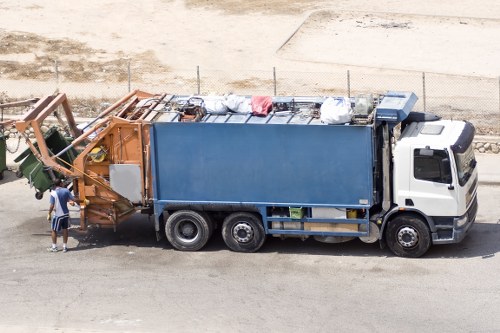
Commercial clearances are easier when the site is ready for straightforward removal rather than last-minute sorting. In practice, that means having a clear idea of what stays, what goes and whether anything needs to be separated before the waste is taken away. Many businesses find it useful to group material by room or by item type, because that creates a simple shared understanding of the work. It is also helpful to note any access limits, such as narrow stairways, shared entrances or loading restrictions.
A quotation request does not need to be complicated. A brief description of the premises, the waste type and the approximate amount usually gives enough context for an initial response. Photographs can also be useful when the load is bulky or spread across several areas, though they are not a substitute for clear written detail. If you want to compare the main routes for disposal, the waste removal page provides a broad overview of the service family.
When businesses prepare in this way, the process tends to be more direct and less disruptive. Items can be identified before collection, the likely scale of work becomes clearer, and the job can be arranged with fewer surprises. Simple preparation is often enough: identify the waste, keep the route clear and let us know anything unusual that may affect removal.
Recycling, reuse and responsible disposal choices
Responsible business waste removal should account for the nature of the material and the most appropriate route for disposal. In commercial settings, that often means separating general waste from material that may be suitable for reuse, recycling or specialist handling. Cardboard, metal, certain furniture items and some fittings can frequently be dealt with differently from mixed rubbish, depending on condition and composition. The point is not to overcomplicate the process, but to make sure the removal is practical and properly directed.
Businesses often appreciate a service that is clear about the kind of waste being removed and the options available for different item types. That can be especially relevant when a clearance includes both ordinary rubbish and larger pieces of equipment or furniture. Where environmental considerations are important to your organisation, it may also be helpful to look at the recycling and sustainability page for a broader view of how waste streams are handled. The key is to balance convenience with suitable handling, rather than treating every load as interchangeable.
This is also where realistic expectations matter. Not every item has the same disposal route, and some materials simply need to be separated or handled with more care than others. A good business waste clearance respects those differences without creating unnecessary delay. If you are unsure what is in scope, a concise description is usually enough to start the conversation.
Business premises and different workplace settings
Business waste removal in Islington can serve many different kinds of workplace, each with its own layout and operating rhythm. Offices may need help with redundant desks and archive material, while shops often need the removal of packaging, displays and storage overflow. Studios, consultation rooms and shared workspaces can produce a mixed load of furnishings, bags and small fixtures. A flexible clearance service is valuable because it can adapt to the type of premises rather than expecting every business to fit one model.
Some jobs are best treated as a general clearance, while others are more specific and can be separated into related services. A workplace with a lot of redundant domestic-style furnishings may benefit from the house clearance page if the job is being organised as a broader item removal task, though commercial premises usually remain the main focus here. What matters most is matching the service to the actual load so that the clearance is useful and proportionate.
For premises with awkward objects, multiple rooms or items spread between front-of-house and storage areas, a measured approach helps keep disruption down. The work can be organised around what needs to leave first, what can be gathered together and what requires more care. That keeps the process grounded in the reality of the site, which is where good waste removal starts.
Request a quotation
If your business in Islington needs waste removed, the simplest next step is to ask for a quotation with a short description of the job. Include the main item types, how much needs to go and whether there are any access points or timing points we should know about. That gives us enough to assess the work properly and prepare a sensible response. For some businesses, a brief call or written enquiry is enough to begin.
We can help with one-off clearances, recurring commercial waste removal and mixed loads that need a practical, organised approach. If you are comparing related services or deciding which route best fits the material, it is worth checking the relevant page before you proceed. When you are ready to move ahead, make your enquiry and ask for a quote.
The final decision often comes down to convenience and fit: choosing a service that matches the premises, the waste type and the level of involvement you want from the team. If you are ready to talk through the details, contact us for a quote and we will help you take the next step.