Business Waste Removal Islington — Recycling and Sustainability
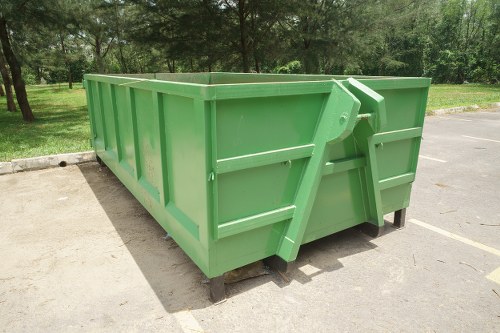 Business Waste Removal Islington is committed to making the borough's commercial waste streams part of a thriving eco-friendly waste disposal area. Our approach balances practical service with long-term sustainability goals: from reducing landfill dependency to increasing reuse and recycling within Islington's busy town centres. We work with local businesses to create bespoke plans that fit trading patterns and building constraints while meeting shared environmental targets.
Across the borough we emphasise the importance of correct separation at source. Islington's policy encourages segregated collections—food waste, dry recycling and residual refuse—so our commercial clients can plug into the same system used by residents. We support the borough's push for food-scrap and organic collections from restaurants, cafes and catering businesses to boost local composting and anaerobic digestion.
Our Recycling Percentage Target
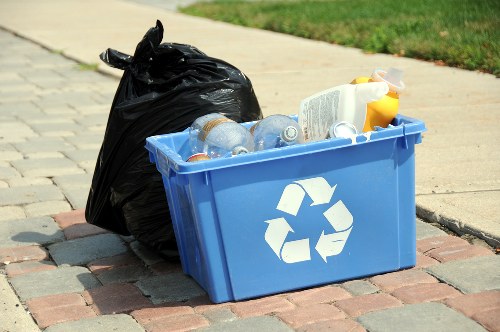
We have set a clear recycling percentage target for our business clients: to reach a 70% recycling and recovery rate for commercial waste by 2030. This target aligns with wider north London ambitions for a low-carbon, high-diversion future and is monitored through regular waste audits, route optimisation and client reporting. Reaching 70% means prioritising reuse, repair and proper sorting of materials such as cardboard, paper, glass, metal and plastics.
Local Transfer Stations and Resource Hubs
To maintain an efficient sustainable rubbish area, we coordinate with local transfer stations and reprocessing hubs in north London. Collected materials are transported to nearby facilities and treatment plants that accept segregated commercial loads, helping to keep haul distances short and emissions down. Working through established transfer stations ensures materials reach the correct recycling streams quickly and reliably.
 We partner with several local civic and private transfer operations to ensure clarity in the material journey — from source segregation, through consolidation at transfer hubs, to onward reprocessing. This reduces contamination rates and improves the quality of recycled outputs, which is essential for creating circular material markets in the borough.
Our partnerships extend beyond infrastructure. We work directly with charities, not-for-profits and social enterprises to reuse and redistribute suitable commercial items.
Charity collaboration is a core element of our sustainability plan: diverting furniture, office equipment, surplus fixtures and usable textiles to local charities and community projects not only reduces waste but supports local people. These partnerships help create a visible, accountable route for items that have residual value rather than being consigned to disposal.
To make these programmes work we maintain clear intake criteria and detailed manifests so charities can accept, refurbish and resell or redistribute items safely. This also tracks carbon savings from reuse versus new production.
Low-Carbon Vans and a Greener Fleet
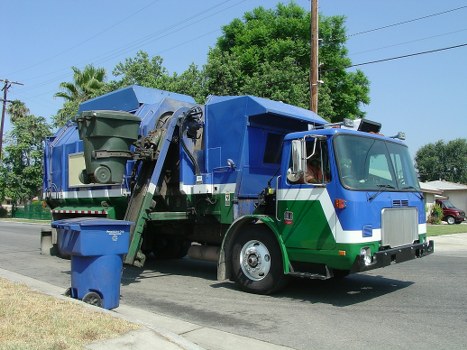
Our fleet strategy prioritises low-carbon vans and efficient routing to reduce emissions across our commercial waste removal services. We deploy hybrid and electric vehicles where operationally suitable and maintain strict idling and loading policies to keep fuel consumption low. Combining modern vehicles with optimised collection schedules reduces miles driven and the associated greenhouse gases.
These low-emission vehicles are part of a broader commitment to an eco-friendly commercial waste disposal network that complements borough policies and encourages other local suppliers to adopt greener fleets.
Practical Recycling Activities in Islington
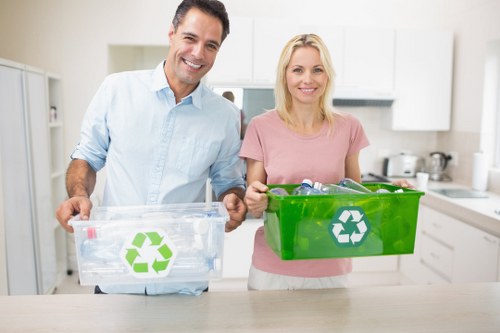
Typical recycling activities we support for businesses include:
- Source-separated cardboard and paper collections to keep fibres clean and market-ready.
- Glass and metal segregation to reduce contamination and support remelting and reuse.
- Food waste collections for restaurants and catering to feed anaerobic digestion and compost systems.
- WEEE (electricals) removal with repair or secure recycling channels for IT and appliances.
- Textile and furniture recovery through charity partners and circular-economy refurb programmes.
The borough’s approach to waste separation—encouraging businesses to use dedicated food bins, clear recycling containers and labelled residual waste sacks—makes these activities more effective. We provide training and on-site labelling to reduce contamination and improve recovery rates.
Reporting, Transparency and Continuous Improvement
We believe measurable goals drive progress. Our standard reporting package for commercial clients includes monthly tonnage breakdowns, diversion rates and suggested actions to improve recycling performance. Strong data enables clients to see the impact of small operational changes and supports borough-wide metrics on sustainable rubbish area outcomes.
Continuous improvement is embedded in our service model: periodic waste audits, route reviews and collaboration with transfer stations and charity partners all feed into a cycle that raises recycling rates, lowers costs and reduces carbon.
Why Choose a Sustainable Commercial Waste Partner?
Business waste disposal in Islington that focuses on sustainability delivers benefits beyond compliance: lower waste costs, stronger community links, and a measurable reduction in environmental impact. By using low-carbon vans, leveraging local transfer stations, and developing charity partnerships, businesses contribute to a resilient, circular local economy.
Our commitment is clear: hit that 70% recycling and recovery target for commercial waste, keep haul distances short via nearby transfer hubs, and ensure as much material as possible is reused, repaired or remanufactured into new products. This is pragmatic sustainability for Islington businesses — efficient, accountable, and designed to scale as the borough’s ambitions grow.
